

Booster Gold: Inside the social media superhero who was 35 years ahead of his time - edwardsjusect1987
Booster Gold: Inside the social media superhero who was 35 years ahead of his metre

Booster Gold is everything a hero isn't supposed to be.
"I think it's pretty awesome that fans like him so much today because, if you think of the character and the path Dan [Jurgens] introduced him, he's a character you really shouldn't like, because he's so self-seeking," aforementioned Keith Giffen, who has written the eccentric respective multiplication over the geezerhood. "And even though he's scholarship his lessons and growing as a person, in that location's still a trifle self-serving core in there.
"But for some odd conclude, fans just respond to information technology," he said.
Giffen's not exaggerating about that buff response. Booster Gold is one of the most surprisingly enduring characters introduced to the DCU in the last 35 years. Not but is he touristy decent to Centennial State-star in his own current solo series Blue & Amber, but he was also the glue to the recent DC event Heroes in Crisis.
Beginning coming into court during the '80s, Booster rocket Gold was a 'nonstarter' in the future, only came back in time to make himself rich and famous. Helium manipulated events from chronicle to make himself a principal, simply even then, he wasn't specially smashing at what he did. Booster often made mistakes and bumbled his way through many another of the original stories in the fledgling Booster Gold series that introduced him.
Yet the character was nothing if not unique.
Booster Gold ushered in a new DC Universe
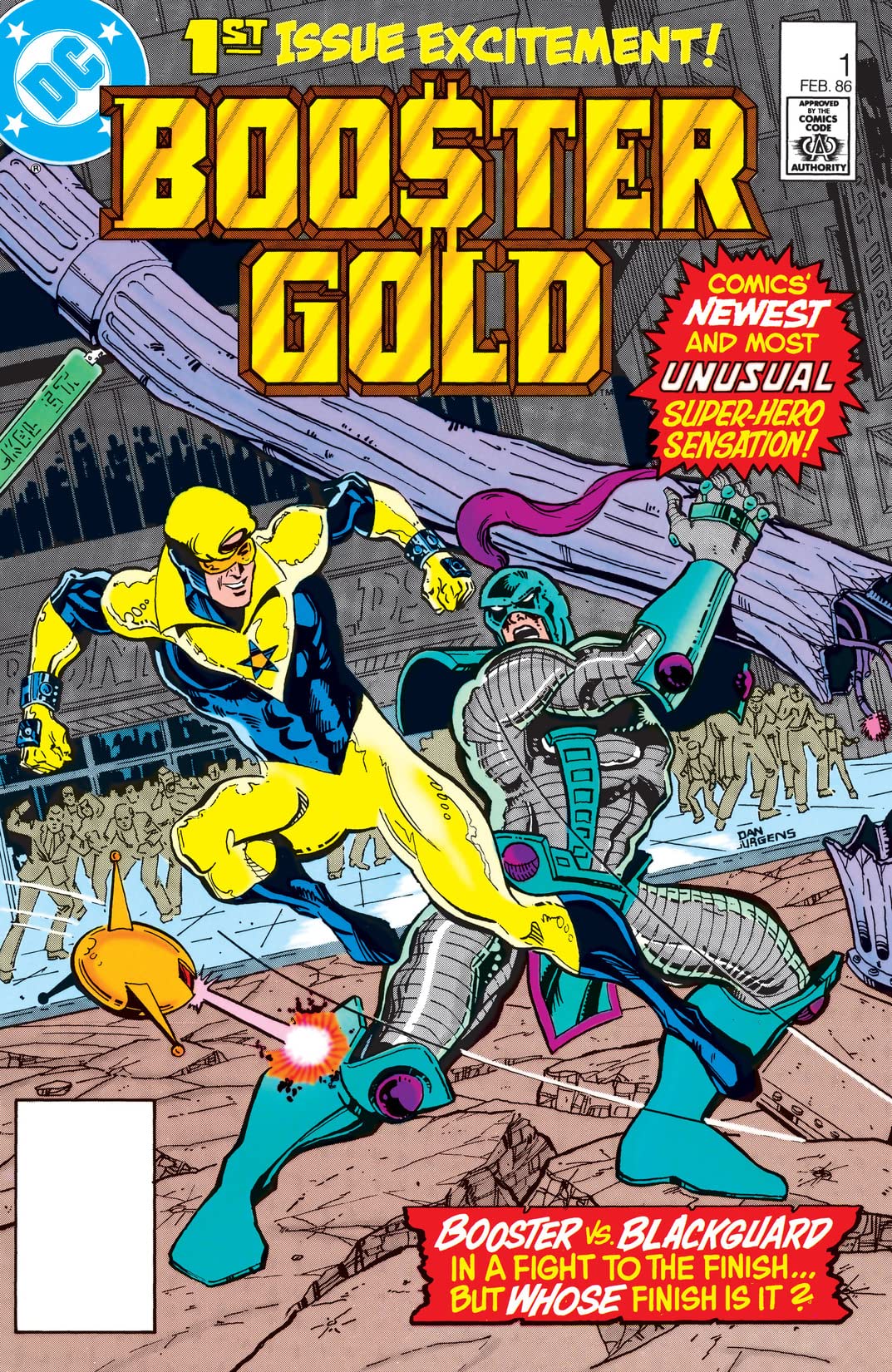
According to his creator, writer/creative person Dan Jurgens, Promoter was improbable to cost unique - something precise different from the D.C. characters who had come with before. After all, He was ushering in a virgin era for Direct current Comics in 1986, being among the first new characters to appear after Crisis on Infinite Earths, which rebooted the entire District of Columbia Universe.
"He was specifically intentional to live different from those that already existed," Jurgens said. "Booster was meant to be practically more media aware and financially driven, which, in a direction, has ready-made him even more relevant. He was specifically designed to be part of a more modern world with the traits, faults, and positives that would whirl along with it.
"Plus, he's always quick to crack a jest at and have fun doing what he's doing," Jurgens added. "There wasn't a spate of that in the DCU."
Jeff Katz, the former Fob film executive World Health Organization helped launch Booter's 2007 series with Colorado-writer Geoff Johns, said what made Booster stand out was that his biggest fault wasn't one you had seen before in other characters.
"At that place were characters before him with flaws. But Booster dose is not only imperfect, He's uniquely flawed," Katz said. "I can't think of any another characters who are overtly egotistical, or whatsoever else hero WHO is driven in the way he is, certainly not during the epoch when he was introduced and non in the regular universe. He's just got a really unique challenge to overcome as he deals with this huge drive helium has to seek attention."
Booster Gold is just like the reside of us

But probably Thomas More important to the 'endurability' of Plugger Gold is the fact that Booster's life feels fellow to readers, in more shipway than one. "I think people relate to him as the ordinary Joe, the janitor from the future, who's devising estimable Eastern Samoa a superhero," Giffen said, pointing out that most comic readers wonder what information technology would be look-alike to endeavour to be a superhero.
And while other characters may deal with weak problems, Booster's problems are particularly the target of jocular, giving readers the chance to look at their personal lives with humor.
"To Pine Tree State, Booster has always been the all-piece in the costume, the guy WHO has the same troubles in life-time we all have," Giffen said. "The jest at who has incommode picking up girls. The guy whose schemes ne'er pan off out.
"I guesswork maybe they respond to somebody who is having the same problems A them and knows that if he goes out and does the right affair, IT's going to cost him. But He goes out and does it anyway," Giffen said.
"Helium's a regular Guy," agreed J.M. DeMatteis, Giffen's Centennial State-author on most of his Booster Gold stories. "A imperfect human, just like the rest of U.S., merely stab into grand circumstances and doing his very best to get aside. Sometimes his best wholly sucks — but he keeps on plugging. And he does it with a sense of humor."
As a matter of fact, Giffen said that, when he and co-writer J.M. DeMatteis were told by editor Andy Helfer they had to use Relay link Gold in their inexperient Justice League run in 1987, information technology was this 'things-never-go-right' element that defined Booster.
"I'll be ingenuous: I had no idea what to do with the character when we first had him," Giffen said. "Booster really didn't gel in my mind until he had the first 'bwa-hour angle-HA' moment and Beetle was laughing at him. I knew then that this character is going to know life's frustrations and is going to get knocked consume a lot, but is always going to sustain back up again."
Booster Gold, Blue Beetle, and Bwa-Hee-haw
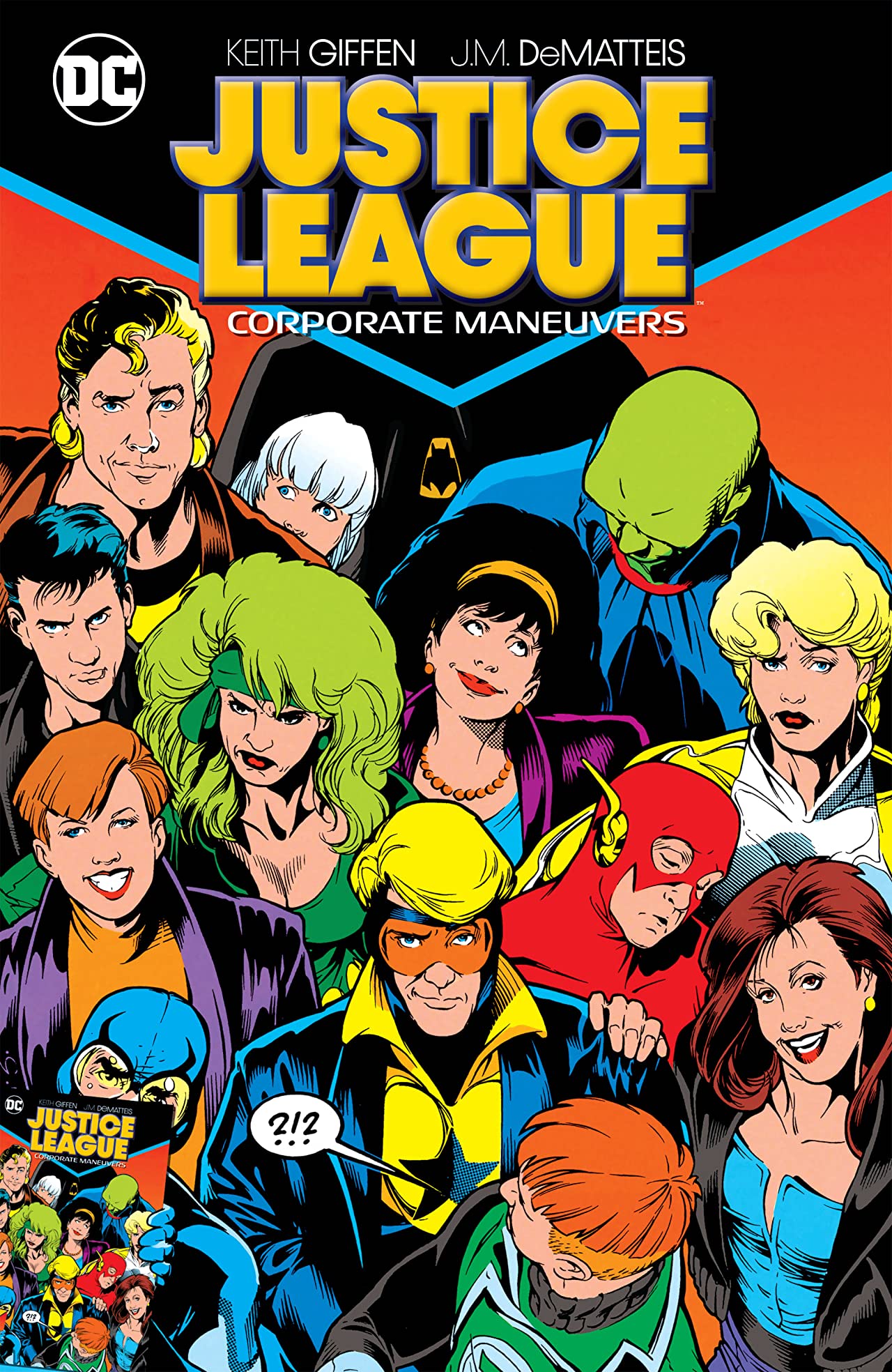
Jurgens credits Helfer's decision to ADHD Booster to the Justice Conference for qualification the character more than just a memory from an '80s comic.
"The juxtaposition of Booster to the another characters truly helped define him, as did his friendship with Blue Overhang," Jurgens said. "It besides kept him alive in the fans' eyes when his first series ended."
For a lot of funny readers today, many of whom started collecting comics when readership grew in the '80s, the Department of Justice League starring Booster Gilded is the ace they remember most fondly, giving the theatrical role even more ringing into the future.
"That Giffen and DeMatteis run is the definitive Justice League fly the coop of my puerility," Katz said. "I learn the stuff anterior to it, but that run was very, very important to Maine and a lot of other people."
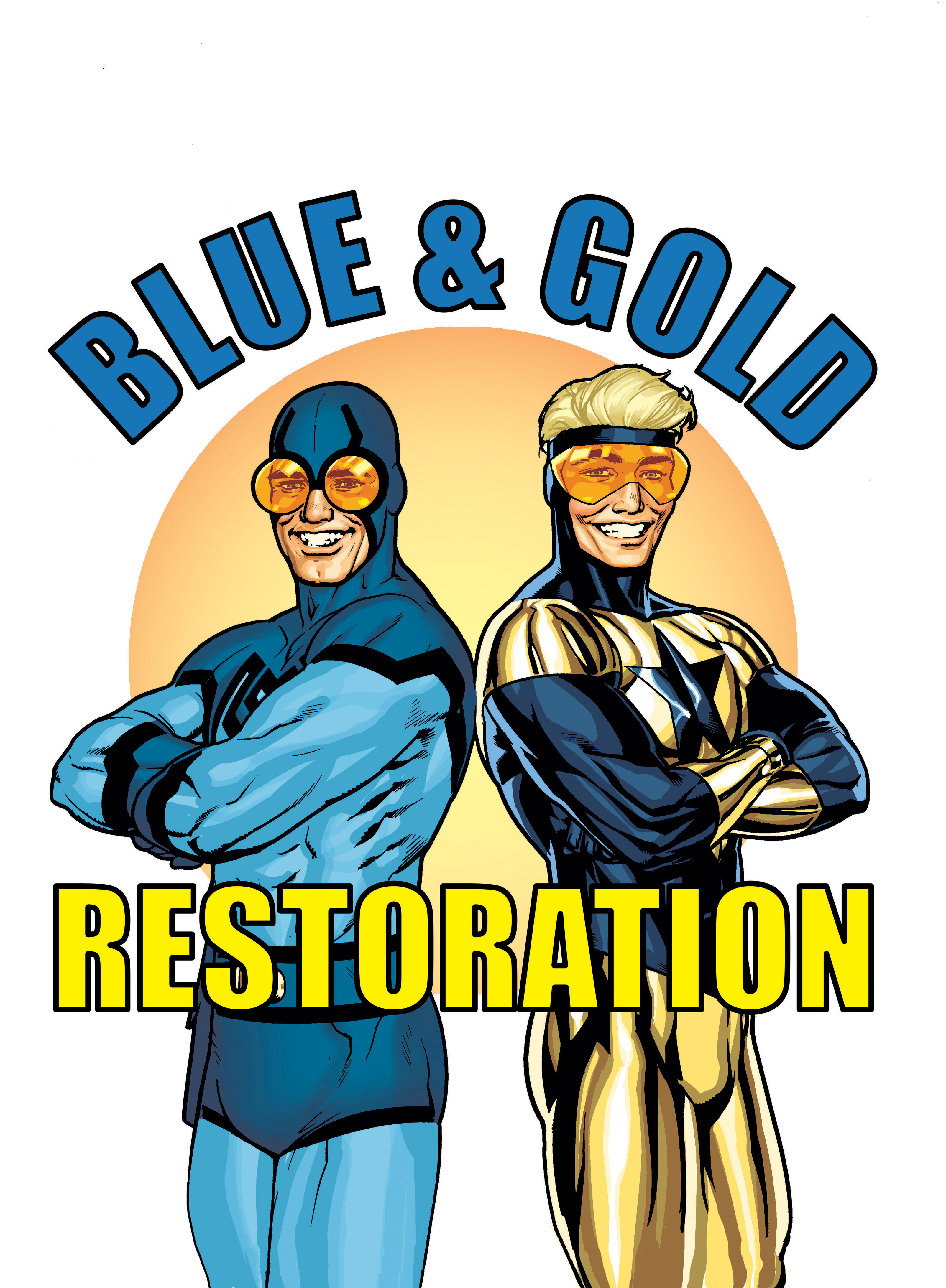
One of the most imperishable parts of the character's membership in the JLA was the friendly relationship helium developed with Blue Beetle, and it helped make him symmetric more relatable, Katz said.

"In a uncanny room, I think they had the 'bromance' thing earlier people even knew what bromance was," he said. "IT was really unique to comics at that time. You had Captain The States and Falcon, and it was a very dry partnership, and you had Batman and Robin or any other pal scenario, where it was the experient mentor helping a younger hero. But with Booster and Blue Beetle, it was really just friendship. That was variant from what you normally saw in superhero comics. And I call up there's a uncolored sort of affinity that comes with that.
"Those two were almost greater together than each of them were individually," Katz said.
According to DeMatteis, the friendship was something he and Giffen contrived to make into a classic team up. IT "just evolved... they did information technology themselves."
As for what the teaming with Blue Beetle did for Booster's persona, DeMatteis said he thinks it brought out the best - and inferior - in him.
"Most important, it made him relatable," DeMatteis added. "The audience in truth took to those two: Blue and Gold functioned as the readers' stand-ins on the team."

Giffen agreed, saying that when readers looked at Relay transmitte and Overhang, they recognized friendships they had themselves. "Everyone's got a friend WHO's kind of a schemer and estimate hombre, who's always room more ambitious than his get through. Everybody also knows the tolerant of guy who tends to tag along because mayhap something good volition happen," Giffen aforesaid. "I think it was just the fact that they were such close friends that resonated with the fans. And also that they did stuff that was distinctive, playing jokes on one other, goofing along cardinal another, forward-cracking backward and forward, just wish we do in our friendship."
Katz said the friendly relationship also helped background the Justice Conference to realism in a right smart that wasn't seen in a lot of mainstream superhero books.
"This was two guys who were almost like a Chorus," He said. "They were sitting at that place midmost of the undermine or watchtower Oregon wherever they were, having the ability to comment on everything with humor, which grounded things a undersized and gave readers a doorway into these of import, larger-than-life stories. They'rhenium the cardinal guys at the end of the bench on the basketball game team up that isn't acquiring in the game much, World Health Organization are there for 2 halves of the game hard to crack each some other awake. In many ways, they're us."
Simply creators also emphatic that the humor of Relay link's time on the Justice Conference was a key factor in why readers warm to him so much.
"I've always been a truster that humor counts, and we went through sol many an periods of grim and gritty, and it feels like we've gone direct at least a couple of those cycles since Booster was introduced," Katz aforementioned. "And to get a guy in the middle of that who can just score you laugh is great. You love him for it."
The evolution of Booster Gold
Contempt the fact that Relay link had a super-sized egotism, creators have almost always bestowed the character a heart toward doing good - turning a potential villain into something fans could pedestal backside.
"Even over the two old age of Booster's first series, he gradually grew to be less self-centered and more heroic," Jurgens needlelike stunned.
"He came back into the past looking for for fame and destiny, for the promotion of Takeoff booster Gold, but under all of that self-seeking attitude, there was a guy who really wanted to make not bad," Giffen said. "I don't think you put on a costume and come indorse into the former in order to embody a superhero without at least several moral center, even if it was buried back then."
Over the old age, that part of Booster has started to acquire, as the character has been gratuitous to evolve into a more courageous person, teaming with his robotic booster Skeets and the time-itinerant poor boy Rip Hunter.
"52 gave him a a good deal greater sense of responsibleness," said Giffen, who worked connected layouts for the serial with writers Geoff Johns, Grant Morrison, Stigmatise Waid, and Greg Rucka. "Then DC emphasized that division of the character when Geoff and Jeff Katz started the Booster Gold serial publication by bighearted him this report of doing just about the opposite of what he came back in time to do, this unselfish hero World Health Organization knows he'll ne'er get a lick of credit for anything he does."
As the original creator of the character, Jurgens accented that even though Booster Gold and his mission have evolved, he calm retains the characteristics that were settled in his original solo series.
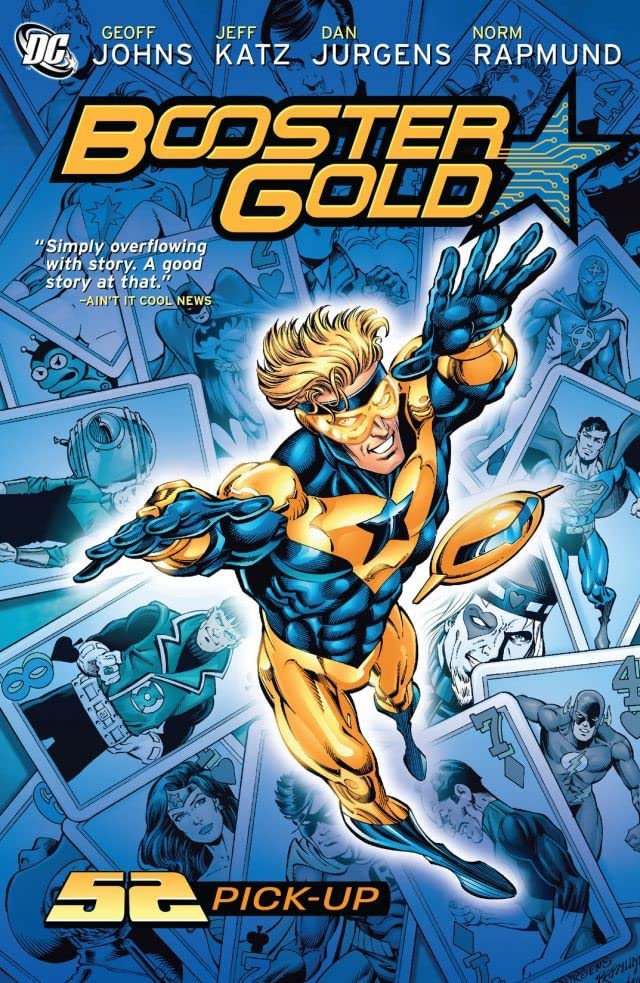
"Geoff Johns and Jeff Katz gave him a time move back mission, but IT was still very consonant with his background and ultimate destination. Too often, characters are reintroduced and immediately touched too far from their seminal, creative blueprint, in an effort to appear new to a new audience," Jurgens aforementioned. "Everything about Booster's origin and reason for existence is still intact. "
And in a comic book landscape painting that often changes continuity, Booster's evolution is something that goes seamlessly with his origins. "In that last issue [of the original Booster Gold series], we stated that Booster would germinate into a rattling important character in the DCU," Jurgens aforesaid. "That process is something that's still in the works and is a precise clear taper off of direction for the character."
Besides, Jurgens said, Booster is already a really timely character, without any changes. "A character World Health Organization is so media savvy as Booster, who is so inclined to profit from his exploits, is, in many ways, more relevant now than in 1985," the writer aforementioned.
Katz united, pointing toward Chirrup and Facebook as examples of self-involved use of media. "We're plausibly as selfish a culture As we've of all time been," he said. "Booster Amber was in advance of the curve. Helium really was from the future, I think."
Protagonist was a big part of the 'late 80s Justice League, which is delved into with our oral history of the 1987 Justice Conference .

Source: https://www.gamesradar.com/booster-gold/
Posted by: edwardsjusect1987.blogspot.com
0 Response to "Booster Gold: Inside the social media superhero who was 35 years ahead of his time - edwardsjusect1987"
Post a Comment